MBR Retrofit & Life Extension

Convert your conventional
plant to MBR

CAS, SBR, RBC, and lagoon systems converted to membrane treatment, usually inside the tanks you already own.

More capacity, tighter effluent, and reuse-quality water without buying land or building a new plant.

the challenges

Why convert a conventional plant ?

M|MBR supports customers evaluating MBR retrofit projects with product-related design, installation, startup, and ongoing support services. We can provide the equipment and components needed for an upgrade as loose parts, integrated assemblies, or part of a turnkey delivery.

Capacity

The community grew, the plant did not, and there is no room to add conventional tankage. MBR treats more flow in the same volume.

Permits

A new nutrient limit, a discharge class change, or a reuse classification arrives, and the existing process cannot reach it reliably.

Footprint

The site is landlocked, or the land next to the plant is worth more than the plant.

Asset value

The concrete is sound and has decades left in it. The process inside it does not.
We are not tied to one OEM

Membrane-agnostic, by design

We are not tied to one OEM’s roadmap, which matters most when the product you own has been discontinued. We supply upgrade equipment as loose parts, integrated assemblies, or turnkey delivery, and support it from design through startup and beyond. 400+ projects delivered, 25+ years of MBR experience.
all things mbr

Who We Work With

M|MBR can support any project type. We specialize in supporting:

Is Your Plant a
Retrofit Candidate?

Try Our MBR Technology Assistant
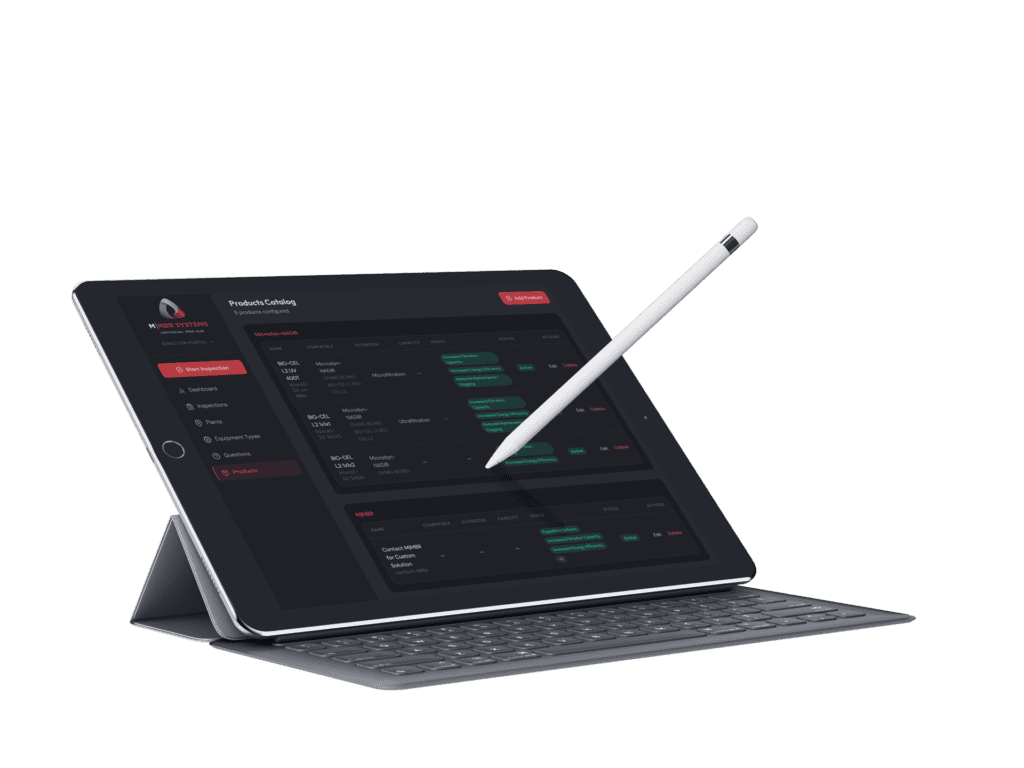
MMBR Systems digital dashboard displayed on a tablet with stylus for data management.

Are your membranes at end of life, or out of capacity?

Comprehensive membrane bioreactor inspections with detailed scoring, photo documentation, and actionable recommendations for your facility.

Upgrades & Expension Case Studies

Conventional conversions we have delivered

Driven by capacity limits, treatment upgrades, footprint constraints, or regulatory change, and in every case completed in the owner’s existing tanks.
Small Plant · 0.10 → 0.20 MGD

Pilot Travel Center, MA

CAS to MBR · 2006, expanded 2025
Doubling capacity on a small plant for roughly half the cost of the conventional route. The original CAS plant was converted to MBR in 2006. In 2025 the owner brought us back to expand capacity during a live upgrade, moving to a more efficient membrane technology in the same basins.
Why M|MBR
Trust, proven experience, multi-disciplinary team, technology, vertical integration.
Life Extension
Medium Plant · 0.60 → 1.04 MGD

Running Springs, CA

CAS to MBR · Running Springs, CA · 2002

A conversion that has been growing with the community for two decades. The original CAS plant became a 0.60-MGD MBR in 2002. We returned several times as the plant expanded, and in 2025 replaced an obsolete flat-sheet product with current membrane technology.
Why M|MBR
Experience, multi-disciplinary team, technology, vertical integration. Guaranteed not-to-exceed price.
Expansion
Large Plant · 6.0 → 10.8 MGD

Clairton, PA

CAS to MBR · Clairton, PA · brownfield
Concrete poured in the 1970s now runs four MBR trains. Average capacity rose from 6 to 10.83 MGD and peak capacity from 9.7 to 38 MGD, all inside the existing basins, with the plant treating flow throughout the phased conversion. Roughly three years of construction inside a fifteen-year client relationship.
Why M|MBR
Trust, proven experience, multi-disciplinary team, technology, vertical integration.
Expansion
Life Extension Services

Single Source Responsability,
Lifecycle Accountability

The design, project management, installation, commissioning, startup, and support services needed to deliver retrofit projects are collectively referred to as asset Life Extension Services. One team, one scope, from the first site walk to the plant back in full operation.

Design

Retrofit-specific product design, equipment selection, and integration with the project engineer’s drawings.

Project Management

One point of contact, one schedule, one accountable party across the equipment scope.

Installation

Loose parts, integrated assemblies, or full turnkey installation, depending on how you want to run the job.

Commissioning

Functional testing and process tuning against the permit you have to meet.

Startup

Bringing membranes and controls online, with operator training on the equipment as installed.

Ongoing Support

Technical support, spares, and service after the contractor demobilizes.